Flooring
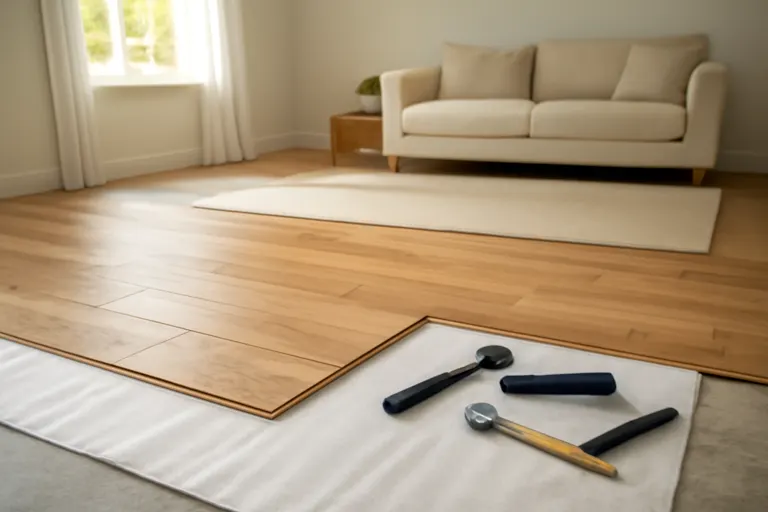
New flooring changes how a whole home feels underfoot. Whether you're comparing hardwood against luxury vinyl plank for a main floor, replacing worn carpet in bedrooms, or refinishing original hardwood, the right result depends on good subfloor prep and clean installation.
We also handle the small stuff — repairing damaged boards, replacing a few tiles, levelling a dip in the floor or installing new baseboards after the flooring goes down.
Flooring services in Ontario
Hardwood Flooring
Hardwood and engineered flooring installed flat, tight and acclimatized to Canadian seasons. Free quotes for one room or a whole main floor.
Hardwood Refinishing
Hardwood refinishing — sanding, staining and finishing that makes a tired floor new again for far less than replacement. Free Ontario quotes.
Laminate Flooring
Laminate flooring installed flat and quiet — honest advice on where laminate makes sense and where vinyl beats it. Free quotes across Ontario.
Vinyl & LVP Flooring
Luxury vinyl plank and tile installed properly — the waterproof floor Ontario basements, kitchens and rentals have been waiting for. Free quotes.
Flooring Installation
Flooring installation across Ontario — hardwood, laminate, vinyl, tile or carpet, with straight advice on which belongs in which room. Free quotes.
Also available by quote
Choosing and installing flooring in an Ontario home
The material is only part of a flooring quote. Removing and disposing of the old floor, levelling a subfloor that dips or squeaks, undercutting door casings, pulling and resetting baseboards, fitting transitions at every doorway and working around stairs all add labour. Stairs are often priced separately because every tread and riser is its own piece of work. In older homes, vinyl or linoleum tiles and the adhesive beneath them can contain asbestos; testing before removal is the safe order of operations, and sometimes the new floor can simply go over the old one.
Ontario's seasons matter for wood. Dry winter air shrinks boards and opens gaps, while humid summers swell them and can cause cupping. Ask the installer how long solid hardwood will acclimatise in your home, what moisture readings they take on the subfloor, and whether they recommend a humidifier. In basements, ask whether the product is rated for below-grade use; vinyl plank and some engineered wood suit concrete slabs, solid hardwood generally doesn't. Condo owners should check the building's acoustic underlay requirements with management before buying anything.
Refinishing is easiest when windows can be opened, because finishes need ventilation and drying time and you'll be kept off the floor for a while. Installation happens year-round, with the busiest stretch in the weeks before the holidays. For a quote, give approximate square footage for each room, say what's down now and what you'd like instead, and add photos showing thresholds, stairs and any damage. Quotes are free with no obligation.
Common questions
Can you install vinyl plank flooring in a basement?
How long does hardwood floor refinishing take?
Why do my hardwood floors have gaps in winter?
Is laminate or vinyl better for a kitchen floor?
Need flooring work?
Describe the job — big or small — and get a free quote.